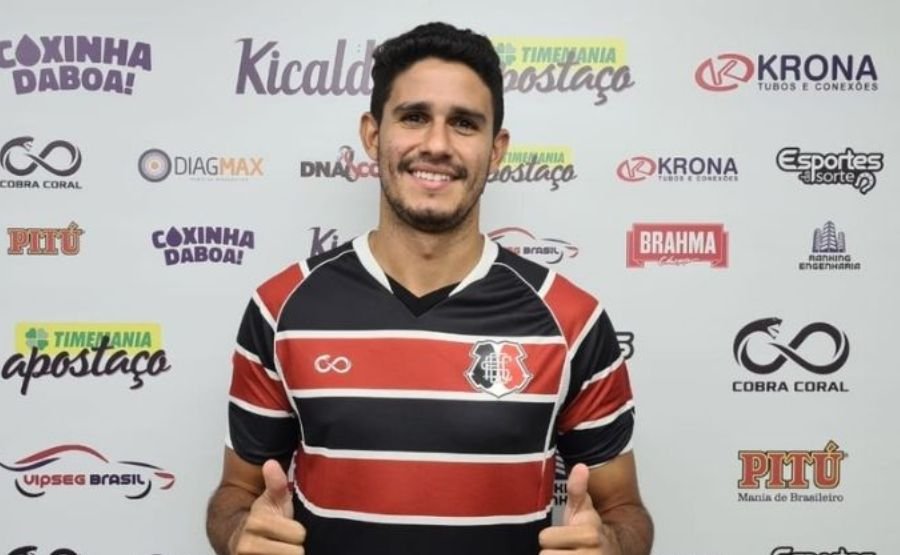
Victor Oliveira: The Long Road of a Brazilian Journeyman Defender
Quick Bio
| Info | Detail |
| Full Name | Victor Oliveira |
| Born | 28 May 1994 |
| Birthplace | Conceição do Araguaia, Pará, Brazil |
| Nationality | Brazilian |
| Height | 1.90 m (6 ft 3 in) |
| Foot | Left |
| Position | Centre-back |
| Best Known For | A career spanning Brazil, Moldova, and Thailand — over 16 clubs across three continents |
| Youth Club | Corinthians |
| Professional Debut | 22 July 2014 (Atlético Goianiense vs. Oeste, Série B) |
| Current Club | Joinville (2026) |
| Market Value | ~€112,000 |
Who He Is and Why It Matters
Not everyone who kicks a ball for a living gets their name in lights. Some players spend their careers chasing contracts, crossing borders, learning new languages, and squeezing whatever opportunity they can out of the sport they love. Victor Oliveira is one of those players — and honestly, that makes his story worth telling.
He’s a Brazilian centre-back who came from a small river city in the north of the country and found his way into professional football through sheer persistence. He trained at one of Brazil’s most storied academies, made it to the top flight of Brazilian football, then took chances abroad in Eastern Europe and Southeast Asia. His career has spanned over a decade, more than a dozen clubs, and three continents. That’s not failure. That’s a kind of professional endurance most people never achieve.
Victor’s story matters because it represents the millions of footballers who don’t headline Champions League nights but keep the sport running at its grassroots and lower-league levels every single week.
See also “Melissa Meeks: The Woman Who Refused to Stay in Anyone Else’s Shadow“
Growing Up and Early Years
Victor Oliveira was born on 28 May 1994 in Conceição do Araguaia, a municipality in the southern part of Pará state in Brazil’s vast northern region. The town, which has fewer than 50,000 residents, is situated along the banks of the Araguaia River, which means “the valley of the parrots” in the indigenous Tupi language. It boasts river beaches that attract hundreds of thousands of tourists each year, a strong Catholic heritage derived from Dominican missionary history, and a way of life influenced by Amazonian ingredients, tropical heat, and the peaceful rhythms of life along a major river.
Growing up in a place like that, far from the big football academies of São Paulo or Rio, is both a beautiful thing and a practical challenge. Football is everywhere in Brazil, even in a town like Conceição do Araguaia — kids play in the street, on dirt patches, wherever there’s space. But the path from there to professionalism is a long one that requires talent and luck in equal measure.
Victor had enough of both to attract attention. The fact that he made it to Corinthians — one of the biggest clubs in Brazilian history — for his youth career tells you everything about the raw potential he showed from a young age.
School and What Shaped Him
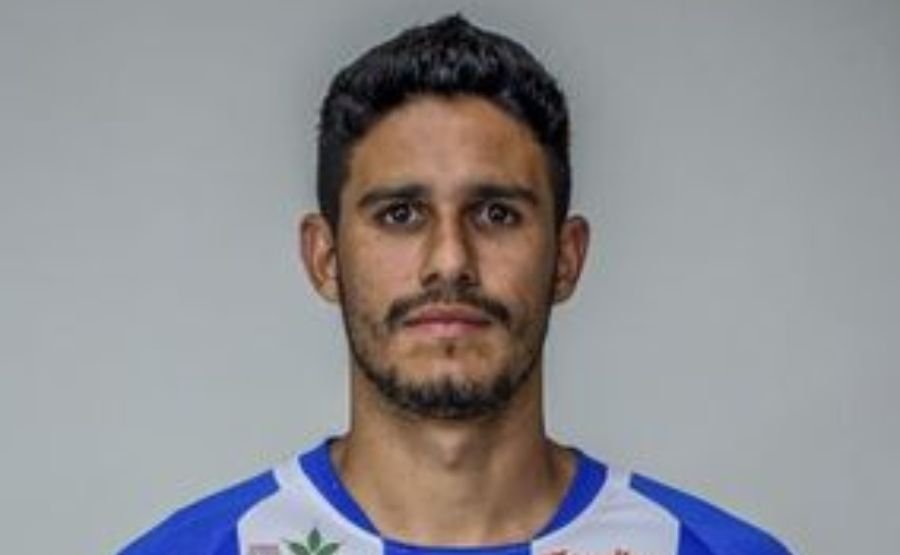
Victor’s formative football education happened at Corinthians, the São Paulo giant known the world over for its enormous fanbase, its storied history, and — crucially — its commitment to youth development. The Corinthians academy in São Paulo is a serious environment. Boys who arrive there from all corners of Brazil are immediately in a competitive ecosystem. You train hard, you fight for your place, and you either grow under that pressure or you don’t.
Victor was in São Paulo as a teenager, far from the Araguaia River and everything familiar. That kind of experience shapes a young man. It teaches discipline. It teaches resilience. It teaches you how to survive in unfamiliar surroundings, which — as it turns out — would become one of the defining features of his professional life.
He didn’t break through into Corinthians’ first team. That’s the reality for most academy players at big clubs. But what the academy gave him was technique, tactical awareness, and a professional mindset that he would carry into every subsequent chapter of his career.
First Steps and the Climb
After parting ways with Corinthians, Victor’s path led him to Atlético Goianiense — a club in Goiânia, the capital of Goiás state — where he impressed the coaching staff on a trial in 2013 and earned a contract. That trial-based entry into professional football says something about his character. He didn’t have a star-studded pedigree or a big-money move. He got his foot in the door through hard work.
His professional debut came on 22 July 2014, in a Série B fixture — Brazil’s second division — when he came off the bench in a 4-2 home win over Oeste. It was a nervy, exciting moment, the kind every professional footballer remembers clearly. He managed 26 appearances that season and chipped in with two goals, which for a centre-back is a decent return.
That performance earned him a move to Fluminense, one of the most traditional and well-respected clubs in Brazil, based in Rio de Janeiro. Fluminense competes in Série A — the top flight — and getting there as a young defender from a small northern city is no small thing. Victor made 15 appearances for the club between 2015 and 2017, including a Copa do Brasil outing, cementing his status as a professional-grade player in Brazil’s elite competition.
In 2016, he went on loan to Joinville in the Série B, gathering more playing time and experience — a pattern that would repeat itself throughout his career. More apps, more leagues, more growth.
Big Wins, Awards, and Turning Points
The most striking chapter in Victor’s career came when he crossed continents entirely. In 2017, he signed with FC Sheriff Tiraspol in Moldova — a club that, while relatively obscure to casual fans, is actually one of the most dominant forces in Eastern European football. Sheriff routinely competes in UEFA competitions, including the Champions League and Europa League, and in 2021 they famously beat Real Madrid in the Champions League group stage. Victor was there years before that historic night, but he still competed in European qualifying — featuring in both the Champions League and Europa League qualifying rounds during his stint. That’s a genuine highlight. European competition, even at the qualifying stage, is not something every professional footballer gets to experience.
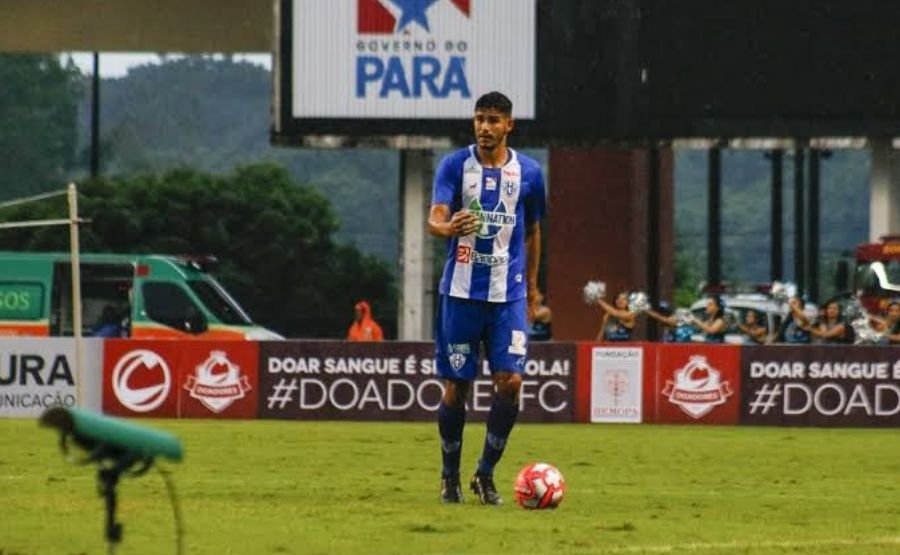
He returned to Brazil after that, moving through several clubs — Tombense, then back on loan to Atlético Goianiense, then a particularly productive spell at Paysandu in 2019, where he played 30 times in Série C and the Copa do Brasil and contributed two goals. That Paysandu season was one of his most consistent stretches of football, and it demonstrated that he had real value at that level. Another loan spell at Figueirense in the 2020 Série B campaign saw him add 10 more appearances and a goal.
In 2022, Victor made yet another bold leap — this time to Thailand, joining Krabi FC in Thai League 2. He then moved to Rajpracha in 2023. These weren’t mainstream moves, but they showed a willingness to see the world, explore new cultures, and keep his career ticking when options at home were limited.
Back in Brazil for 2024, he had stints at Bangu and Aparecidense before heading to Thailand again, this time to Chiangrai United in Thai League 1 — the top division. By 2025 he was with Anápolis in Série C, and in January 2026 he joined Joinville in the Catarinense competition, where he still plays today.
Private Life and Family
Victor Oliveira has kept his personal life genuinely private throughout his career. There is no tabloid history, no high-profile relationship drama, and no social media spectacle around his off-the-pitch existence. What is publicly known is limited: he’s reported to be single, with no confirmed partner or children on record as of the time of his most recent public profiles.
This privacy isn’t unusual for players at his level. He’s not a star of Série A or the Champions League whose every meal gets photographed. He’s a working professional who has spent over a decade doing his job, often far from home. The loneliness of being a journeyman footballer — new cities, new teammates, new languages — is something that rarely gets talked about but is very real. Victor has navigated that quietly and without complaint, as far as anyone can tell.
His roots, of course, are in Conceição do Araguaia, and the values of that community — resilience, hard work, a connection to something bigger than yourself — seem to have shaped who he is.
Hard Times and Setbacks
Let’s be real: Victor’s career has had more than its fair share of difficulty. The reality of being a journeyman player is that you’re always one contract away from an uncertain future. You don’t get to train at one club for years and build relationships. You move. Constantly.
Look at his record between 2018 and 2022 alone: Tombense (2 appearances), Atlético Goianiense on loan (6 appearances), Paysandu on loan (30), Figueirense on loan (10), Sampaio Corrêa (6), Santa Cruz (0 appearances), Barra (0 appearances). Club after club. Some didn’t work out at all — zero competitive minutes at Santa Cruz, zero at Barra. That’s a hard stretch. That’s showing up, training, trying, and not getting the chance you needed.
Going abroad — first to Moldova, then to Thailand — wasn’t always a glamorous choice. It was often a practical one. The market in Brazil is competitive, contracts are short, and for a centre-back without a major brand attached to his name, opportunities at home can dry up quickly. Victor kept finding ways forward, even if those ways were unconventional.
His current market value sits at around €112,000 — modest by modern football standards — a number that reflects his career trajectory honestly. There’s no shame in it. It’s simply the reality of where he sits in the vast pyramid of professional football.
Money and Net Worth, Kept Simple
Victor Oliveira is not a wealthy footballer by the standards of Série A regulars, let alone European superstars. His transfer history shows a long succession of free-agent moves, which means no big transfer fees and no signing-on bonuses in the millions. Contracts at clubs like Paysandu, Sampaio Corrêa, Bangu, and Krabi FC are solid professional wages, but nowhere near the numbers that generate headlines.
His estimated market value as of 2026 is around €112,000 — a sensible number for a 31-year-old defender playing in Brazil’s state-level competitions and lower divisions. His career earnings over a decade of professional football, at the clubs he’s represented, would place him comfortably in the professional-tier bracket without making him financially independent by Brazilian standards.
In short: he makes a living from football. A good living compared to the average person. But not the kind that comes with a fleet of cars or a mansion. He’s a working professional in the world’s most popular sport, and that’s genuinely admirable.
Where He Is Now and How He Lives
As of early 2026, Victor Oliveira is at Joinville FC, competing in the Campeonato Catarinense — the state championship of Santa Catarina in southern Brazil. He returned to the club he’d previously been loaned to back in 2016, completing a full circle in a career full of unexpected detours. He signed on a free-agent deal in January 2026.
His recent match record tells the story of a 31-year-old experienced professional who still gets called upon — sometimes starting, sometimes off the bench — bringing calm, physical presence, and years of accumulated know-how to a younger squad. In the 2025 Goiano season with Anápolis, he played 12 times and contributed a goal. In the Thai League 1 with Chiangrai, he made 9 appearances. He’s still active, still valued, still in the game.
Life as a footballer at this level in 2026 means keeping fit, staying mentally sharp, taking contracts when they come, and not worrying too much about where the next one might be. Victor seems to have made peace with that life a long time ago. He plays the game he has always loved, in whatever corner of the world will have him.
Final Words
When you step back and look at Victor Oliveira’s career as a whole, what you see is not a story of failure or unfulfilled potential. What you see is a story of relentless persistence.
He grew up in a small river city in the Amazon north, made it to one of Brazil’s greatest football academies, reached the Série A, played European football in Moldova, competed on a different continent entirely in Thailand — twice — and is still playing professional football at 31. That’s a career built from tenacity, adaptability, and a genuine love of the game.
Most footballers who come out of small towns in Pará don’t make it this far. Victor did. Not with headline glory, not with transfer records, but with a kind of quiet, grinding professionalism that deserves more recognition than it typically gets.
His journey is a reminder that professional football is not only about the Vini Jrs and the Neymars. It’s also about the thousands of Victors — the ones who show up, pull on the shirt, and do the job, city after city, season after season, for the love of the game.
FAQs
1. When and where was Victor Oliveira born?
Victor Oliveira was born on 28 May 1994 in Conceição do Araguaia, a city in the state of Pará in northern Brazil.
2. What position does he play?
He plays as a centre-back — a central defender. He’s left-footed and stands 1.90 m (6 ft 3 in) tall, which gives him an excellent presence in aerial duels.
3. Which youth club did he come from?
He developed through the youth academy of Corinthians, the São Paulo club widely regarded as one of Brazil’s most prestigious. He didn’t break into their first team, but the academy shaped his professional foundation.
4. When did he make his professional debut?
His debut came on 22 July 2014, in a Série B match for Atlético Goianiense against Oeste. He came off the bench in a 4-2 home win — a confident start.
5. Has he ever played in European competitions?
Yes. During his time at Sheriff Tiraspol in Moldova (2017–2018), he featured in the qualifying rounds of both the UEFA Champions League and the UEFA Europa League — a rare achievement for a Brazilian-born lower-league defender.
6. Why did he play in Thailand?
Victor has had two stints in Thailand — with Krabi FC in Thai League 2 in 2022 and with Rajpracha in 2023, then with Chiangrai United (Thai League 1) in 2024–25. The moves were professional decisions when opportunities in Brazil were limited, and reflect his willingness to seek games wherever they were available.
7. What is his estimated net worth?
There are no confirmed figures, but based on his career trajectory — free-agent moves, contracts at mid-to-lower tier Brazilian and Asian clubs — his earnings have been professional but modest. His current market value is estimated at around €112,000. He earns a living from football without being a wealthy man by elite-athlete standards.
8. Has he ever played for the Brazilian national team?
No. Victor has not represented the Brazilian senior national team or any documented youth national team. His career has been at club level only.
9. Where does he play now?
As of 2026, he is at Joinville FC in Brazil, competing in the Campeonato Catarinense. He joined on a free transfer in January 2026.
10. What makes his story unusual compared to typical footballer biographies?
Most footballer biographies focus on rising stars, national team glory, or major trophy wins. Victor’s story is different — it’s about a decade-plus of persistence across three continents, multiple leagues, and a huge number of clubs, all without fanfare. He’s a journeyman in the best sense of that word: a professional who has seen the world through football and kept showing up every single time.
Every story has a journey. Discover yours with The Prestige Magazine.


One Comment