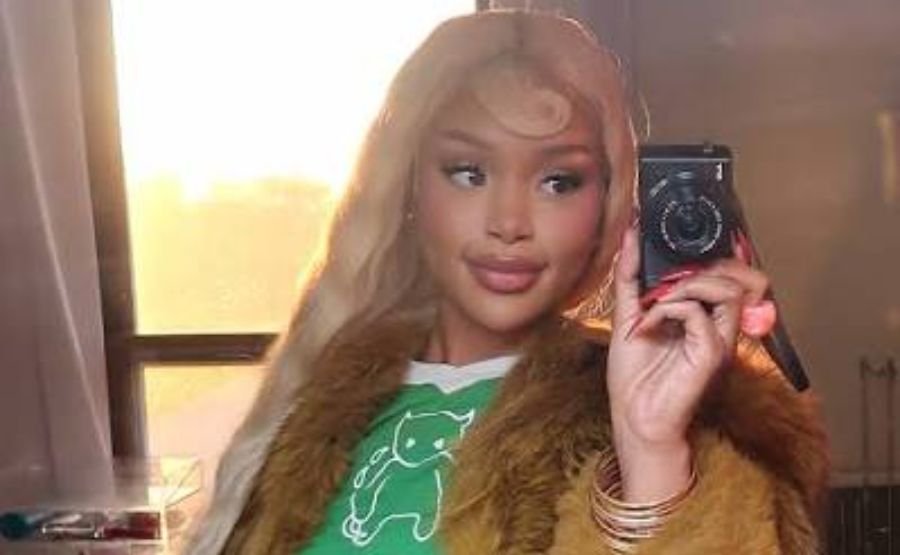
Jourdin Pauline: The Guyanese Pop Princess Building an Empire from the Ground Up
Quick Bio
| Info | Detail |
| Full Name | Jourdin Pauline Redic |
| Birth Date | August 23, 1999 |
| Birthplace | Georgetown, Guyana |
| Nationality | Guyanese-American |
| Occupation | Singer, songwriter, actress, model, entrepreneur, content creator |
| Best Known For | Being dubbed the “Guyanese Pop Princess”; viral singles “Spiral,” “Rockstar,” “Top of the Morning,” and “Sugar”; behind-the-scenes songwriting for dozens of television shows |
| Key Facts | Moved to Los Angeles at age six; was writing and co-producing music at age ten; homeschooled after being bullied in second grade; trained at South Bay Conservatory; worked with Grammy-winning producers who have collaborated with Beyoncé, Drake, and Chris Brown; Fashion Nova brand ambassador; lost her sister Maleesa Mooney to homicide in September 2023 |
Who She Is and Why It Matters
There is a certain kind of artist who does the hard work for years before anyone notices their face. Jourdin Pauline is that artist.
Long before she was posting videos or landing celebrity co-signs, she was the person in the room nobody talked about — the songwriter, the behind-the-scenes contributor, the kid from Georgetown who figured out how the music industry ticked while most people her age were still figuring out high school. She had songs placed on some of the most-watched television shows on American cable before she was old enough to drive.
Then, when the time was right, she stepped in front of the curtain. The world began to take notice.
Jourdin Pauline is not simply a pop star from a small country trying to break through. She is proof that preparation wins. She spent a decade building something before she started performing it, and that foundation shows in everything she does — in the confidence of her vocals, in the sharpness of her brand, in the way she handles both her wins and her losses. The story of how a girl from Guyana’s capital city ended up making music that Cardi B dances to on social media is genuinely remarkable. And it started somewhere very small.
See also “Susan Acevedo: The Woman Behind the Patches on Rock History’s Back Cover“
Growing Up and Early Years
Georgetown is Guyana’s capital, a coastal city on South America’s northeastern edge. It sits where the Demerara River meets the Atlantic, and it carries all the heat and color and complexity you would expect from a Caribbean-influenced South American country. That is where Jourdin Pauline came into the world on August 23, 1999.
When she was six years old, her family took a plane to Los Angeles. They landed in South Central — specifically the Hyde Park neighborhood, near Crenshaw and Slauson, a part of the city that is far from glamorous and very far from the music industry dream. It is the same stretch of southwest Los Angeles that Nipsey Hussle put on the map. Tight streets, loud nights, a neighborhood where life moves fast and you either adapt or you don’t.
For a little girl who had grown up in a developing country with a specific way of talking and a specific relationship with the world, the culture shock was real. She spoke differently. She said “tree” instead of “three.” The other kids in school picked up on it immediately.
She got bullied. Badly enough that by second grade, her family pulled her out of traditional school entirely. From then on, she was homeschooled.
Here is the twist, though. Homeschooling gave her something that a regular school schedule never would have — uninterrupted time with herself and with music. While other kids were doing gym class and passing notes, Jourdin was sitting with melodies, figuring out how a song is built from the inside out. She has said herself that school never clicked, sports never clicked, nothing really clicked except music. That was where she lived.
Her mother remembers her first words being sung rather than spoken. That might be a bit of family mythology, but it speaks to something real. This was never a hobby that got serious. It was always serious.
School and What Shaped Her
Formal education, for Jourdin, happened mostly at home and mostly on her own terms. But the one institution that genuinely shaped her early artistic identity was the South Bay Conservatory, a performing arts school where she trained in musical theatre, vocal performance, and the technical craft of being a stage performer.
She also took private piano lessons and worked consistently on the songwriting side of things — not just performing songs but understanding how they were assembled, what made a chorus land, what a bridge needed to do emotionally.
The influences she absorbed during those years are telling. Her playlist was not driven by whatever was on pop radio. She gravitated toward Prince. Toward Minnie Riperton. Toward Stevie Wonder. Toward Aaliyah. These were artists who understood musicality at a deep level — artists who could sing and write and inhabit a song rather than just deliver it. She also loved Michael Jackson and Janet Jackson, two performers whose command of stage presence and sound design left a permanent mark on her understanding of what an entertainer actually is.
By the time she was ten years old, she was not just studying music. She was working on it.
First Steps and the Climb
At an age when most kids are playing outside, Jourdin Pauline was in studios writing songs for television.
The first major collaborator who helped open that door was Alonzo Jackson — a producer with deep roots in the industry who had worked alongside Beyoncé, Kelly Rowland, and Dr. Dre. Working under that kind of guidance at ten years old does two things to you: it teaches you the actual craft at a professional standard, and it teaches you that the highest level of the business is reachable. It is not some abstract dream. It is a room you can get into if you are serious enough.
Jourdin was serious enough.
The placements came. Songs she co-wrote started appearing on Disney Channel shows — Shake It Up, ANT Farm. Then the reach expanded. Love and Hip Hop on VH1. America’s Next Top Model on CW. Bad Girls Club. Keeping Up with the Kardashians. CSI: Miami. Teen Mom. The Last OG. Grown-ish. Black-ish. By her mid-teens, her name was on credits across half the cable landscape, and almost nobody watching those shows knew who she was.
That invisibility was a choice the industry made, not one she made. Songwriters rarely become household names. The machine gets the spotlight, and the people who build the machine stay in the dark. Jourdin accepted that reality for a while. She absorbed everything it had to teach her. And then she started planning her own exit out of the back room and into the front.
She also worked with Brian “Killah B” Bates, a producer whose credits include Chris Brown and Usher. And with Kevin “Go Grizzly” Price, who has produced for Kevin Gates and DaBaby. And with Raymond “Rey Reel” Martin, a Grammy-recognised name who has worked with Beyoncé, Drake, Nicki Minaj, Mariah Carey, and others. The network she built during those years was not random. These were deliberate relationships with serious people, made by a young woman who understood exactly what kind of musician she was trying to become.
Big Wins, Awards, Turning Points
The transition from behind-the-scenes writer to front-of-camera artist started picking up real momentum in 2019. That was the year Jourdin dropped “Trash (#TWNA),” a declaration of intent rather than just a debut record. It was bold, self-assured, and centered on a sound that combined R&B melody with trap production in a way that felt truly unique.
Then came “Spiral.” The video racked up over a million views on YouTube. For an independent artist without major label machinery behind her, that number matters. It means the audience found the music on its own terms, which is a much harder and more meaningful achievement than being pushed to people by algorithm spend.
In 2021, Jourdin released her debut EP, Love Songs About Nobody. It was her first extended statement as an artist — a collection that put her voice and her perspective front and center. The title alone was sharp. Not love songs about someone. About nobody. There was wit in that, and self-possession.
The collaboration with Skillibeng, the Jamaican dancehall artist, on “Rockstar” gave her a different kind of momentum. The track hit over two million YouTube views and found life on TikTok, which in the current landscape is where songs become cultural moments. It also made sense as a cultural statement — a Guyanese artist linking with a Jamaican voice, bringing different strands of the Caribbean diaspora together in a song that worked for clubs, playlists, and late-night scrolling.
The biggest co-signs came with her later work. “Top of the Morning,” featuring Cash Cobain and Bay Swag, caught Cardi B’s attention in a way that Cardi made very public. When one of rap’s biggest names starts moving to your music on social media, the algorithm does the rest. Then “Sugar” landed Kim Kardashian’s personal endorsement — not a paid placement, just an unsolicited declaration that the song was a favourite. In the celebrity attention economy, moments like that are worth more than most marketing budgets.
She has been covered by BET, Flaunt, Vibe, The Source, Hypebae, and Billboard. She is a brand ambassador for Fashion Nova. She has performed at real venues. She has the fanbase, the critical recognition, and the industry relationships. The empire she keeps talking about building is not a fantasy. The foundation is already poured.
Private Life and Family
Jourdin has always been more open about her heritage than about the details of her personal life. Her Guyanese identity is not a marketing angle — it is genuinely central to who she is. She has spoken about wanting to eventually retire back to Georgetown, about feeling incomplete when she is not connected to home, about the fact that everything she is building in Los Angeles is ultimately for her people in Guyana.
She describes her own fashion sense as something like “high-fashion hippie goddess.” That combination — structured luxury and free-spirited earthiness — shows up in her visuals and in how she carries herself publicly. She showed up to a Paramount Studios meeting once with her nails painted in Guyana’s national flag. That is someone who has decided, in a very deliberate way, that their roots will be visible no matter what room they walk into.
Jourdin has kept romantic relationships private. She has not publicly confirmed a partner or significant other, and that boundary appears to be intentional. She talks freely about faith, about God, about the spiritual dimension of her creativity. She credits her abilities to something larger than herself.
Her sister Maleesa Mooney was her closest person.
Hard Times and Setbacks
September 12, 2023 was the worst day of Jourdin Pauline’s life.
Her sister Maleesa Mooney — a model and real estate agent who worked out of a prestigious Beverly Hills agency — was found dead inside her luxury high-rise apartment in downtown Los Angeles. She was thirty-one years old. She was two months pregnant. Her body was discovered after their mother, unable to reach Maleesa for days, contacted the building manager to check on her. The autopsy confirmed homicide. She had been violently beaten.
The city was gripped by the story. Jourdin went public immediately. She posted on Instagram in a voice that was raw and unfiltered and heartbroken. She wrote that her sister was the reason she was who she was. Her first best friend. The one who taught her everything. She created the hashtag #JUSTICEFORMALEESA and spoke to the media while clearly distraught, asking in sincere despair how nobody in that building heard anything.
As of the time of writing, no arrest has been publicly reported.
That loss would have broken a lot of people. Jourdin has processed it publicly, partially, while also trying to protect her sister’s memory from people who wanted to turn a tragedy into content. When online attacks came — mocking her grief, misrepresenting her sister, piling on during the worst chapter of her life — Jourdin pushed back firmly before eventually stepping back from social media to protect her mental health.
Separately, she made a public allegation of sexual assault against a prominent content creator. He denied it. The controversy that followed brought significant online harassment her way. She was direct about the mental toll it was taking, posting about threats and dehumanising language aimed at her, her mother, and the memory of her sister.
She has navigated all of this while still releasing music. That takes a particular kind of endurance.
Money and Net Worth, Kept Simple
No confirmed figure exists for Jourdin Pauline’s net worth, and any number circulating online should be treated with skepticism.
What we do know is that she has spent over a decade generating income from multiple streams — songwriting royalties from television placements (which can pay well and pay repeatedly), performance fees, brand work through Fashion Nova, social media monetisation, and direct music revenue. These are real income sources. None of them are lottery-ticket money, but together, over fifteen-plus years of consistent industry work, they add up to something meaningful.
She is an independent artist operating without the financial safety net — or overhead — of a major label. That means more creative control and more of the revenue when things go right. It also means more personal risk. She has made that trade deliberately.
She is not a mansion-and-yacht story. She is a working artist with a genuine hustle history, building something with long-term intent.
Where She Is Now and How She Lives
Jourdin Pauline is still in Los Angeles, still working, and still loud about where she comes from.
Her music keeps moving. New singles, new features, new moments of cultural traction. The TikTok era has been good to her because she understands how to create moments, not just records. The Cardi B co-sign and the Kim Kardashian endorsement of “Sugar” happened in quick succession, which suggests the momentum is building rather than levelling off.
She is also still carrying the grief of losing Maleesa, and she has not pretended otherwise. That grief shows up in her public presence, in the way she talks about purpose and legacy, in the faith she keeps returning to when she explains why she does any of this.
She has said, in multiple ways across multiple interviews, that her music is her way of putting Guyana on the map. She wants to be the artist that South American kids see and think: someone from somewhere like where I’m from made it. Not by abandoning where she came from. By carrying it with her every single step.
Final Words
Think about the timeline. A six-year-old lands in South Central Los Angeles from a developing country. She gets made fun of at school for the way she talks. She gets pulled out of that school. She turns the isolation into creative fuel. By age ten she is writing professionally. By her early twenties she had songs on dozens of television shows, a genuine fanbase, and celebrity endorsements she did not pay for.
Then she gets hit with the worst kind of grief, in the most public way imaginable, while people on the internet try to make it worse. She keeps going.
What makes Jourdin Pauline distinctive is not just the voice, though the voice is genuinely remarkable — that mix of silky R&B tone over trap-influenced production is a combination she has made her own. It is the sequence. Patience. The decade of invisible work before the visible payoff. The refusal to soften the cultural identity that made her a target in second grade and now makes her a headline.
She describes herself as authentic above everything else. Listening to her story, that is hard to argue with. She has not built a brand that is separate from who she actually is. She built a version of herself and then found the people who recognised it.
Georgetown, Guyana produced this. South Central, Los Angeles shaped it. The music industry tried to keep it invisible. The internet eventually found it. And none of those forces, including the most devastating personal loss, have stopped the output.
That is the story. She remains in the midst of it as well.
FAQs
1. Who is Jourdin Pauline?
She is a Guyanese-American singer, songwriter, model, actress, and entrepreneur born on August 23, 1999, in Georgetown, Guyana. She moved to Los Angeles at age six and has built a music career that spans behind-the-scenes television songwriting and a growing solo artist profile as the self-described “Guyanese Pop Princess.”
2. Where is Jourdin Pauline originally from?
She was born in Georgetown, Guyana, a country on the northeastern coast of South America that shares cultural ties with the Caribbean. She and her family relocated to Los Angeles when she was six years old, settling in the Hyde Park area of South Central.
3. How did she get her start in the music industry?
She began writing music at age ten, working under the guidance of veteran producer Alonzo Johnson. Her early career focused almost entirely on the songwriting side — placing songs on television shows like Shake It Up, Love and Hip Hop, Keeping Up with the Kardashians, and CSI: Miami. She worked her way into professional circles that included Grammy-winning and Grammy-nominated producers before launching her solo career.
4. What are her biggest songs?
Her breakthrough as a solo artist came with “Spiral,” which crossed one million views on YouTube. “Rockstar,” a collaboration with Jamaican dancehall artist Skillibeng, exceeded two million YouTube views and performed well on TikTok. “Top of the Morning,” featuring Cash Cobain and Bay Swag, drew public praise from Cardi B. “Sugar” earned a personal endorsement from Kim Kardashian.
5. Why was she homeschooled?
She was bullied in second grade — partly because of her Guyanese accent, which made certain pronunciations stand out to her American classmates. Her family removed her from school after that experience, and she was homeschooled from that point forward. She has credited that decision with giving her the focused time and creative freedom that allowed her to pour herself into music.
6. What happened to her sister Maleesa Mooney?
Maleesa Mooney, Jourdin’s older sister and a model and real estate agent in Los Angeles, was found dead on September 12, 2023, inside her downtown LA apartment. She was thirty-one years old and two months pregnant. Her death was ruled a homicide. Jourdin went public with the loss immediately and launched a public campaign for justice. The case remains unsolved as of the time of this writing.
7. What does Jourdin Pauline say about her Guyanese heritage?
She speaks about it consistently and with clear emotional depth. She has said she only feels complete when connected to home, that everything she is building in Los Angeles is ultimately for the people of Georgetown, and that she hopes to retire back in Guyana one day. She incorporates her heritage visually into her image — most notably with her nails frequently painted in the colours of Guyana’s national flag.
8. Who are her musical influences?
She has cited Prince as her single greatest influence. Alongside him: Minnie Riperton, Stevie Wonder, Aaliyah, Michael Jackson, Janet Jackson, Rihanna, and Frank Ocean. The range of that list tells you something — she grew up absorbing artists across soul, R&B, funk, and alternative music, not just whatever genre she performs in herself.
9. Does she have a confirmed net worth?
No credible figure has been confirmed. She has generated income from songwriting royalties, solo music releases, brand partnerships including Fashion Nova, social media, and performance. She has been an active professional in the music industry for over fifteen years. Any specific dollar figure online is an estimate without verified sourcing.
10. What is she doing now?
She continues to release music from Los Angeles. “Top of the Morning” and “Sugar” both generated significant online attention in 2024 and beyond. She has continued performing, developing her brand, and building her public profile. She has stepped back from social media at various points due to online harassment but has consistently returned with new music and a clear intent to keep growing. She has also indicated future plans to eventually move back to Guyana.
Every story has a journey. Discover yours with The Prestige Magazine.