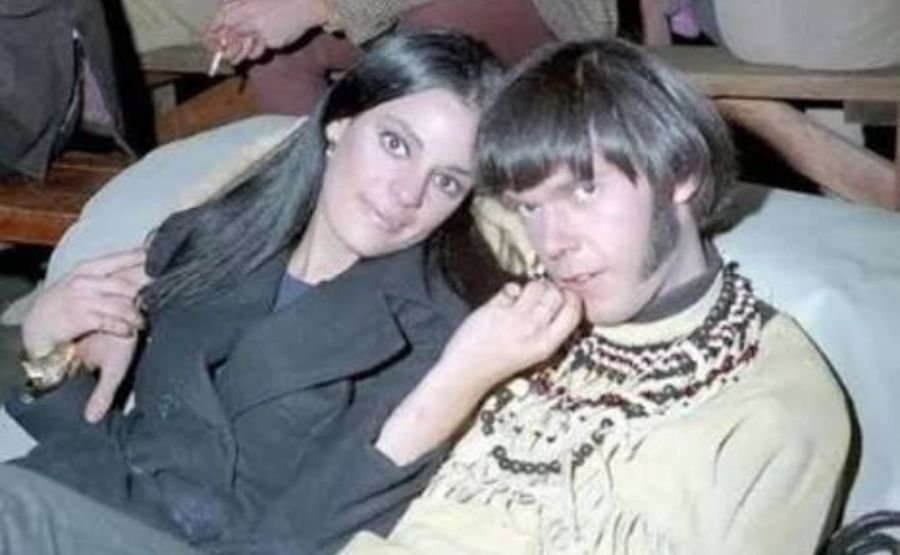
Susan Acevedo: The Woman Behind the Patches on Rock History’s Back Cover
Quick Bio
| Info | Detail |
| Full Name | Susan Acevedo |
| Birth Details | Born in the United States; exact date and location not publicly recorded |
| Heritage | Sicilian-American |
| Nationality | American |
| Known For | First wife of rock legend Neil Young; owner and hostess of Canyon Kitchen restaurant, Topanga Canyon, California |
| Married | December 1, 1968 (to Neil Young); divorced October 1970 |
| Children | One daughter, Tia, from a relationship prior to her marriage |
| Key Contribution | Hand-sewed the iconic patchwork on Neil Young’s jeans featured on the back cover of After the Gold Rush (1970); introduced Young to actor Dean Stockwell and visual artists George Herms and Wallace Berman |
| Current Status | Entirely private since 1970; whereabouts unknown |
Who She Is and Why It Matters
Some people leave giant footprints. Susan Acevedo left a pair of patched jeans.
They appear on the back cover of After the Gold Rush, one of the most celebrated albums in rock history. The jeans are famous. The hands that made them were, for a very long time, completely forgotten.
Susan Acevedo was Neil Young‘s first wife. She was also, in her own right, a woman worth knowing about — a self-made restaurant owner in one of California’s most creative neighborhoods, a single mother raising her daughter before any musician ever walked through her door, a connector of artists and actors whose social network quietly shaped a masterpiece. She chose to step away from public life the moment her marriage ended, and she has never stepped back in. Not one interview. Not a single press appearance. Not a social media account. Nothing, for over fifty years.
That level of deliberate privacy is itself a kind of statement. In an era when everyone who ever stood near a famous person eventually writes a memoir or does a podcast, Susan Acevedo simply disappeared — and the rock history world is only now starting to fully appreciate what was quietly lost from the frame.
This is her story.
Growing Up and Early Years
Here is the honest truth: Susan Acevedo has kept her early life almost completely to herself.
No verified birth date has ever entered the public record. No hometown. No names of parents. She was born in America, she is of Sicilian descent, and she was raised within a family that appears to have held Christian faith at its center. That is genuinely all that can be confirmed.
It might feel frustrating, reading a biography that opens with so many gaps. But consider what those gaps actually represent. Susan was not some minor celebrity who slipped into obscurity because nobody cared. She was, for two crucial years, at the center of one of rock music’s most important chapters. The gaps exist because she put them there. She decided, somewhere along the way, that her story belonged to her and only her.
What we do know is that by the late 1960s she was already a woman of considerable independence. She was living in Topanga Canyon, a small, wild stretch of California hill country between Malibu and the San Fernando Valley. She was running her own business. She was raising a young daughter named Tia on her own. Before a rock star ever sat down at one of her tables, she had carved out a real existence.
School and What Shaped Her
There is no public record of where Susan went to school, what she studied, or what her formal education looked like. She has never spoken about it.
What we can say is that the world that shaped her most profoundly — the world that really made her who she was — appears to have been Topanga Canyon itself. That place was something special. It sat in the Santa Monica Mountains, not far from the Pacific coast, geographically close to Hollywood but spiritually miles away. It attracted painters, sculptors, musicians, poets, and independent thinkers who wanted to live outside the mainstream entertainment machine while staying close enough to occasionally work in it.
Susan did not just pass through this community. She was rooted in it. She had friendships with visual artists like George Herms and Wallace Berman, serious figures in California’s avant-garde art scene. She knew actors and filmmakers. She understood what it meant to be part of a creative neighborhood, not just to admire one from the outside.
And she built that understanding through genuine human connection, not through industry networking or celebrity proximity. She earned her place in that world the old-fashioned way — by being genuinely curious, genuinely warm, and genuinely there, every morning, feeding people and talking to them like they mattered.
First Steps and the Climb
Susan’s most visible professional step was Canyon Kitchen, the small breakfast restaurant she owned and operated in the tiny Topanga shopping center.
Running a restaurant is no small thing. It is relentless, physical, demanding work. You have to handle money, suppliers, staff, difficult customers, long hours, and the unpredictability of a business that lives and dies on whether people feel like leaving the house for breakfast that morning. Susan did it, in a canyon community that was simultaneously artistically vibrant and economically unconventional, while raising a child by herself.
That is not a footnote. That is the backbone of who she was.
Canyon Kitchen became a genuine gathering spot for the Topanga crowd. Artists would come in. Musicians would roll through. The counter was a place where conversations about painting and folk music and California sunsets happened naturally, alongside the coffee and the eggs. It was the kind of place that only exists when the person running it actually belongs to the community it serves.
Neil Young started coming in for breakfast not long after he moved to Topanga in the late 1960s. He had just left the group Buffalo Springfield, the band that first made him famous, and was in the process of figuring out what came next. He would come in every morning. He would order the same thing — egg with the yolk cooked just so, bacon on the side. And every morning, Susan would bring it to him.
That is how great love stories sometimes begin. Not at award ceremonies or backstage parties. At a small counter, over a predictable breakfast order, morning after morning after morning.
Big Wins, Awards, Turning Points
Susan Acevedo never sought awards or public recognition. But her turning points are woven into the fabric of one of rock music’s most remarkable creative periods.
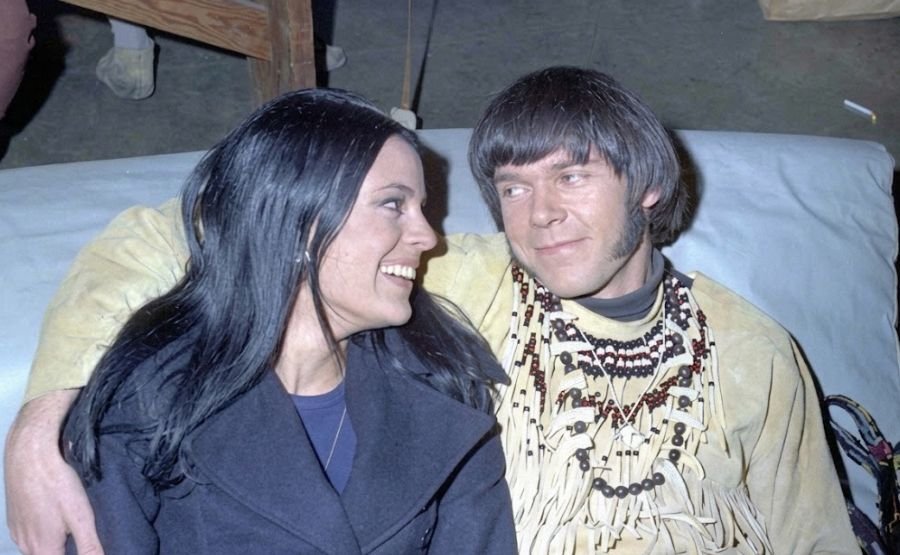
She and Neil Young married on December 1, 1968. The ceremony was held at his redwood house in Topanga Canyon and attended by a small circle of close friends. There were no photographers looking for a scoop. There were no publicists managing the story. It was exactly the kind of wedding that fit the canyon’s spirit — intimate, handmade, real.
What followed was two years that mattered enormously to rock music history.
Young was recording, writing, and building the relationships that would define his early solo career. Much of After the Gold Rush — the 1970 record that would cement his reputation as one of the most original voices of his generation — was recorded in the basement of the house they shared together. The sounds that came out of those sessions happened inside the domestic space that Susan and Young called home.
And she contributed to that record in a way that most people still do not know. The back cover photograph shows Young from behind, wearing a pair of well-worn denim jeans covered in carefully sewn fabric patches. Those patches were Susan’s work. She created them by hand. According to Young’s own account, she used strands of her own hair as thread in places — a detail so intimate and so specific that it stays with you once you hear it.
Young credited her directly in his writings. Those jeans, that back cover, those patches — that is Susan Acevedo’s work, reproduced on millions of albums, posters, and streaming thumbnails across more than five decades. Almost no one who has ever seen that image knew whose hands made it.
She also made Young a patchwork vest. He kept it carefully long after the marriage ended. He wrote about it years later with unmistakable tenderness, calling it beautiful, saying he wanted to preserve it always.
Beyond the clothes, Susan’s most lasting contribution to Young’s career may have been the social bridge she built for him. Through her existing friendships in the Topanga arts community, she introduced Young to actor Dean Stockwell. Stockwell had written a screenplay — a story about an ecological catastrophe sweeping away the Topanga community — and Young was so struck by it that he initially planned to write music for the film. The movie never got made, but the songs Young wrote for it became After the Gold Rush. The album’s entire title came from a screenplay Susan’s friendship network put in front of him.
She also introduced Young to artists George Herms and Wallace Berman, significant figures in California’s experimental visual arts world. Young has spoken about this directly, saying that through Susan he was introduced to the very concept of visual art — that she opened a door in him that had never been opened before.
Private Life and Family
Susan had one daughter, Tia, from a relationship before she met Neil Young. Tia was roughly six years old when Susan married Young in 1968, making the musician a stepfather for the duration of the marriage.
That is the full extent of what is verifiably known about her family. No names of parents. No siblings confirmed. No family history that she has ever chosen to share with the public.
What Young has said about Susan in private terms is genuinely touching. He described her as his friend above all else. He talked about her warmth, her energy, the way she was animated and alive in rooms in a way that drew people toward her. People who knew them both noted that they were almost comically different on the surface — Young quiet and inward, Susan sharp-tongued, city-spirited, and bold. The attraction, by all accounts, made perfect sense precisely because of that contrast.
Hard Times and Setbacks
The marriage ended in October 1970 when Susan filed for divorce. They had been married for less than two years.
By most accounts, the reason was straightforward and painfully common in the music world. Young was on the road constantly. He was recording, touring, building a career that demanded more of him than any marriage could comfortably absorb. He was also becoming genuinely famous — a different thing from the rising songwriter who had wandered into Susan’s restaurant every morning looking for eggs and company. Fame changes things. Distance changes things. Susan spent long stretches alone in their Topanga home while Young was somewhere else being Neil Young.
She filed the papers herself. She made the decision. That agency matters.
What happened next was mostly silence. Susan appears to have left the world she shared with Young cleanly and completely. She did not seek to capitalize on her connection to him. She did not write articles about those years. She did not become a rock widow archetype, recycled endlessly in interviews about what it was like to be married to a legend. She walked into her own private life and stayed there.
There are reports that she eventually remarried. No confirmed details exist.
Money and Net Worth, Kept Simple
Susan Acevedo’s financial life is entirely private. No figure, no estimate, no career earnings have ever been documented publicly. She was a small restaurant owner in a California canyon community in the 1960s. She was never wealthy in a tabloid sense, and she has never made the kind of public moves — books, interviews, brand deals — that typically generate the data points needed to estimate someone’s net worth.
What she had, in the years that matter, was a business she built herself and ran herself. That counts for something. It just cannot be counted in the way financial journalism likes to count things.
Where She Is Now and How She Lives
Nobody knows.
That is the honest answer, and it deserves to be said plainly rather than buried in hedging language.
Susan Acevedo has maintained what can only be described as one of the most complete disappearances in modern rock history. For more than fifty years — since October 1970 when she filed those divorce papers — she has given zero interviews, made zero public appearances, and left zero social media footprint. Researchers who have looked for her have come up empty. Journalists who have tried to trace her have found nothing she did not want them to find.
There is some indication she may have remarried at some point after Young. That is as far as any confirmed knowledge goes.
What we are left with is the image. A pair of patched jeans on the back of a classic record. Hands that worked with thread and care and, by one deeply personal account, strands of their own hair. A breakfast restaurant in a California canyon where the right people kept showing up every morning.
Susan Acevedo chose herself over a footnote. That is something.
Final Words
Think about what Susan Acevedo actually did during the two years of that marriage.
She introduced her husband to the artist who inspired one of his greatest albums. She introduced him to visual art, full stop — opened something in him that had not existed before. She sewed the clothes that ended up on the back cover of a record that has never gone out of print. She did all of that while running her own business, raising her daughter, building a life in an unconventional community, and doing it with enough warmth and energy that people who were around her back then still remember exactly how she made rooms feel.
And then she walked away. Not bitterly. Not loudly. Just away.
There is something genuinely admirable about that. Rock history is littered with ex-wives and ex-partners who spent decades managing their proximity to someone else’s fame. Susan chose the opposite. She was not a footnote who wanted to be a headline. She was a whole person who happened to spend two years next to a headline, and when those years ended she went back to being a whole person again.
The patches on those jeans are still out there, on streaming platforms and record shelves and vintage store bins. The image has probably been reproduced more times than Susan Acevedo has ever thought about. Somewhere, someone is buying a used copy of After the Gold Rush right now, turning it over, looking at those jeans, and not knowing a thing about the woman who made them.
She probably prefers it that way.
FAQs
1. Who exactly is Susan Acevedo?
She is a Sicilian-American woman who was the first wife of Canadian-American rock musician Neil Young. She owned and operated Canyon Kitchen, a breakfast restaurant in Topanga Canyon, California, in the late 1960s. Her marriage to Young lasted from December 1968 to October 1970.
2. When and where was Susan Acevedo born?
No confirmed birth date or birthplace has ever been made public. She has kept those details entirely to herself throughout her life, and no researcher has been able to fill in the gaps with verified information.
3. How did Susan Acevedo and Neil Young meet?
Young moved to Topanga Canyon after leaving Buffalo Springfield and became a regular at Canyon Kitchen, the restaurant Susan owned. He came in every morning for the same breakfast — egg cooked a particular way, with bacon. Over time, those daily visits turned into conversation, and conversation turned into something more.
4. When did they get married and where?
They married on December 1, 1968, at Young’s redwood home in Topanga Canyon. The wedding was a private affair attended by close friends, with no media presence or public announcement.
5. What is Susan Acevedo’s most famous contribution to rock history?
The patches on the jeans Neil Young wears on the back cover of After the Gold Rush (1970) were hand-sewn by Susan. Young confirmed in his memoir that she made his patchwork clothing during that period, with some accounts noting she used strands of her own hair as thread. She also made him a patchwork vest he held onto long after the divorce.
6. Did Susan Acevedo have any other influence on Young’s work?
Significantly. Through her existing friendships in the Topanga arts community, she introduced Young to actor Dean Stockwell, whose screenplay gave After the Gold Rush its name and inspired the album’s entire creative framework. She also introduced Young to visual artists George Herms and Wallace Berman, and Young has credited her with opening his eyes to visual art as a concept entirely.
7. Why did the marriage end?
Susan filed for divorce in October 1970 after roughly two years of marriage. The primary reason, as described across multiple biographical accounts, was Young’s relentless touring and recording schedule, which left Susan alone in their Topanga home for extended periods. As Young’s career accelerated, the balance of the marriage shifted in ways that made the partnership unsustainable.
8. Did Susan Acevedo have children?
She had one daughter, Tia, from a relationship that predated her marriage to Neil Young. Tia was approximately six years old when her mother married Young in 1968. There are no confirmed children from the marriage itself, and no information about Tia’s life has been made public.
9. What happened to Susan Acevedo after the divorce?
She stepped entirely out of the public eye. There are indications she may have remarried at some point, but no confirmed details about her post-Young life, location, or circumstances have ever surfaced. She has given no interviews in more than five decades. Her whereabouts as of 2026 are unknown.
10. Is Susan Acevedo still alive?
This cannot be confirmed or denied. She has maintained such complete privacy that no reliable information about her current status exists. Given that the Topanga Canyon era was the late 1960s, she would likely be in her late seventies or early eighties if still living. No death has been reported, but given the depth of her privacy, that absence of reporting does not confirm either way.
Every story has a journey. Discover yours with The Prestige Magazine.


2 Comments